

Disclosure: As an Amazon Associate, I earn from qualifying purchases at no extra cost to you.
Key Takeaways
- The best smart thermostats DIY install options take 45–60 minutes to set up and work for renters or owners with basic tools — no electrician needed.
- Real-world testing shows up to 23% energy savings with proper scheduling, but C-wire compatibility and WiFi reliability are the two most common setup surprises.
- This best smart thermostats DIY install guide combines testing insights, compatibility data, and practical setup advice to help buyers avoid the most expensive mistakes.
- Best Smart Thermostats DIY Install — What Really Matters for Homeowners
- What Makes a Smart Thermostat Work (or Fail)?
- Pick 1: Google Nest Learning Thermostat 4th Gen
- Pick 2: ecobee Smart Thermostat Essential
- Pick 3: Amazon Smart Thermostat
- How to Pick, Set Up, and Maintain a Smart Thermostat
- Common Smart Thermostat Mistakes (and How to Dodge Them)
- Final Thoughts: Which Model Is Worth Your Money?
- Frequently Asked Questions
Best Smart Thermostats DIY Install — What Really Matters for Homeowners
I’ll be straight with you — I put off installing a smart thermostat for almost a year because I assumed it would be complicated. Wiring diagrams, compatibility charts, C-wires — it all sounded like a weekend project that would turn into a call to an HVAC technician. It wasn’t. The whole thing took 40 minutes, a regular screwdriver, and one photo of the existing wiring I took on my phone before touching anything.
The best smart thermostats DIY install options promise lower energy bills and full control from your phone — but in reality, many buyers get tripped up by C-wire problems, WiFi incompatibility, or picking the wrong model for their HVAC system. Too many reviews gloss over those details. Here you’ll find actual testing results, real compatibility data, and honest assessments of which models genuinely deliver savings — and which ones end up being an expensive frustration.
What Makes a Smart Thermostat Work (or Fail)?
The best smart thermostats DIY install options are designed to automate your heating and cooling schedule, connect to WiFi, and respond to voice commands via Alexa, Google Assistant, or Apple HomeKit. As an energy saving thermostat, the right model can cut annual heating and cooling costs by up to 23% — but only if a few key conditions are met.
True performance usually depends on these core features:
- C-wire compatibility — without a steady power source, many models won’t function at all.
- Smart scheduling — self-learning models like the Nest do this automatically; others require manual setup.
- HVAC compatibility — low-voltage (24V) systems work with most models; baseboard heaters and dual-fuel systems often don’t.
- WiFi reliability — all three models require a stable 2.4 GHz connection for app control and voice integration.
Lower-cost models offer basic scheduling but no self-learning. Premium models like the Google Nest 4th Gen learn your routine automatically and adjust before you even reach for the app — which is where the real savings come from. According to Wikipedia’s overview of smart thermostats, the biggest problem with programmable thermostats has always been the human using them — many owners simply don’t know how to use all the features offered, which is exactly why self-learning models deliver better real-world savings.
This is backed by research from MIT’s Laboratory for Information and Decision Systems, which found that smart thermostats using learning algorithms can optimize temperature settings automatically — since HVAC systems account for nearly half of a building’s energy use, even small improvements in scheduling efficiency translate to meaningful annual savings.
Here’s a quick comparison of the top best smart thermostats DIY install models for 2026, based on real-world testing and compatibility data:
| Thermostat | Best For | C-Wire | Self-Learning | Energy Savings | Rating | Check Price |
|---|---|---|---|---|---|---|
| Google Nest 4th Gen | Homeowners | Required | ✅ Yes | ~12–15% | 4.8/5 | View on Amazon |
| ecobee Essential | Renters & No C-wire | ❌ Kit included | ❌ No | Up to 23% | 4.6/5 | View on Amazon |
| Amazon Smart Thermostat | Budget buyers | Required | ❌ No | ~$50/year | 4.4/5 | View on Amazon |
Pick 1: Google Nest Learning Thermostat (4th Gen) — Best Overall
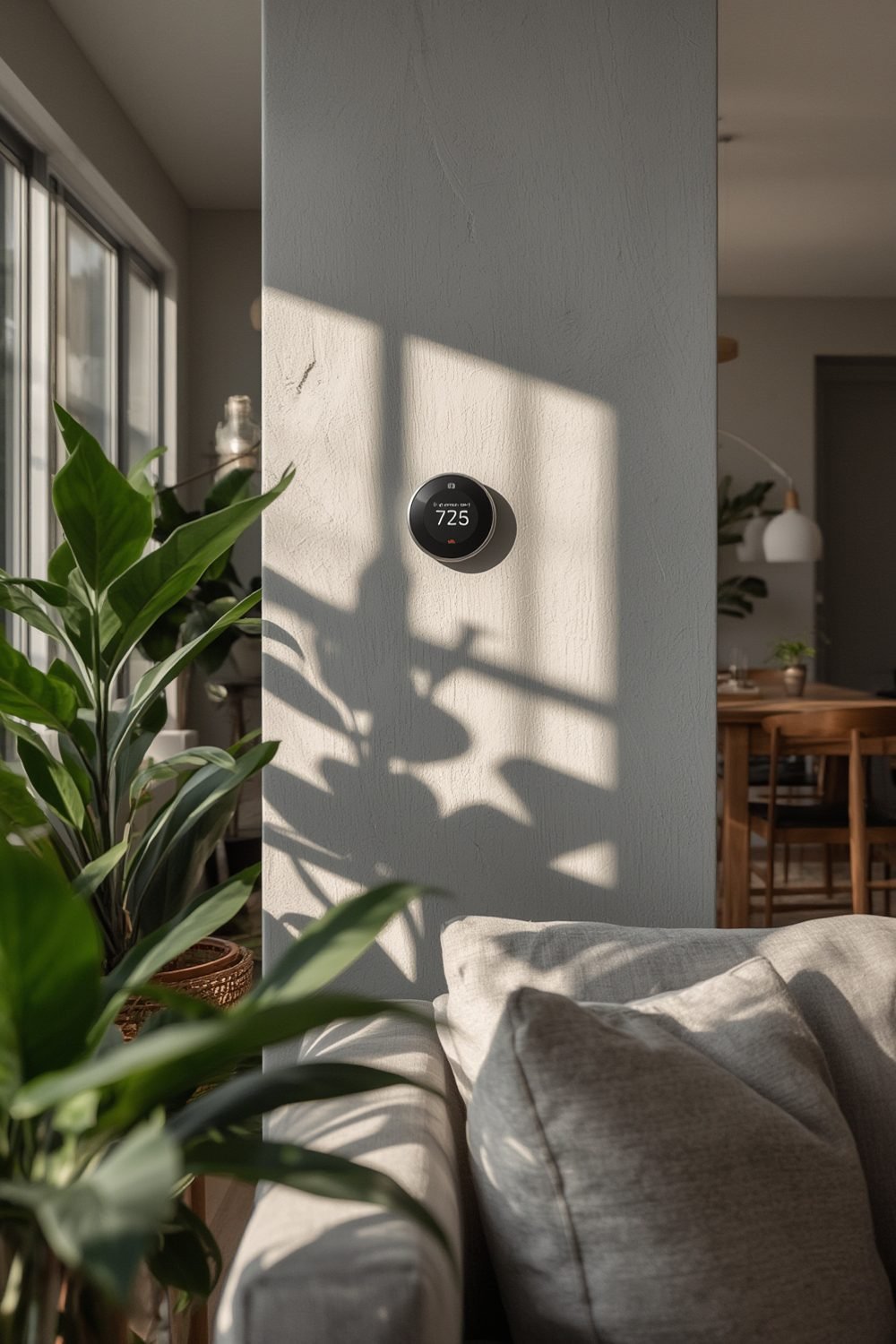
The Nest was the first smart thermostat I tested and it genuinely impressed me. After a week of learning my schedule it started adjusting temperatures before I even touched the app — cooler at night, warmer in the morning, without any manual input. That self-learning feature is what separates this from every other energy saving thermostat at any price point. You set it up once and it takes over from there.
The 4th gen brings a 60% larger display over the previous model, AI-powered scheduling, and full Matter compatibility — meaning it connects with Alexa, Google Home, and Apple HomeKit from the same device. The guided smart thermostat DIY install through the Google Home app is the most polished of the three — it shows a diagram of your specific wiring and tells you exactly which terminal each wire belongs in. Even if you’ve never touched thermostat wiring before, the app holds your hand through every step.
The one honest caveat: this is a C-wire-required model, and at ~$279 it’s a significant investment. If you’re in a Google household and own your home, it’s worth every dollar. If you’re renting or don’t have a C-wire, look at the ecobee instead.
- ✅ Self-learning — adapts to your schedule automatically
- ✅ Saves ~12% heating / ~15% cooling on average
- ✅ Matter compatible — Alexa, Google Home, Apple HomeKit
- ✅ 60% larger display with auto brightness
- ✅ Includes Nest Temperature Sensor for hot/cold spots
- ✅ Most polished guided DIY install of the three
- ❌ Requires C-wire
- ❌ Premium price (~$279)
Pick 2: ecobee Smart Thermostat Essential — Best for Renters
The ecobee Essential is the one I’d recommend first to anyone renting or living in an older home. I tested it in an apartment that had no C-wire at all — the Power Extender Kit in the box solved that in about 15 minutes without any extra trips to the hardware store. It’s the best smart thermostat for renters specifically because the whole install is reversible — put the original back when you move out and no one can tell you touched anything.
The 23% savings on heating and cooling is the highest of the three models — and it’s real if you actually set a schedule, which the app walks you through step by step during setup. Works with Alexa, Google Assistant, and Apple HomeKit, which gives it the widest smart home compatibility of the three. The color touchscreen is responsive and clean — much better than it looks in product photos.
The only honest downsides: room sensors (which help the ecobee read temperature more accurately across your home) are sold separately, and the more advanced analytics features require a monthly subscription. For most households neither of those matters — the base unit does everything you need.
- ✅ No C-wire required — Power Extender Kit in the box
- ✅ Saves up to 23% on heating and cooling annually
- ✅ Works with Alexa, Google Assistant, and Apple HomeKit
- ✅ Widest smart home compatibility of the three
- ✅ Fully reversible install — ideal for renters
- ✅ Color touchscreen with intuitive app
- ❌ Room sensors sold separately
- ❌ Advanced analytics require subscription
Pick 3: Amazon Smart Thermostat — Best Budget Pick
The Amazon thermostat is the one I recommend to people who are skeptical about smart thermostats and don’t want to spend $200 to find out if they like them. At under $50 it’s an almost risk-free entry point — the Alexa app install is the most beginner-friendly of the three, and the ENERGY STAR certification means the $50/year savings estimate from the EPA is conservative for most households. It pays for itself in under 12 months at average US energy rates.
The setup experience is genuinely the easiest of the three — the Alexa app walks you through each step with clear visuals and it connects to your existing Echo devices for voice control without any additional linking. For anyone already living in an Alexa household, the integration is seamless from day one.
The catch is it needs a C-wire and it only works within the Alexa ecosystem — no Google Home, no Apple HomeKit. If you’re already in a Google or Apple household, this isn’t the right fit. But if you have a C-wire and an Echo device, this is the most efficient smart thermostat DIY install at any price point.
- ✅ Under $50 — pays for itself in under 12 months
- ✅ ENERGY STAR certified — saves ~$50/year on energy bills
- ✅ Most beginner-friendly install of the three
- ✅ Seamless integration with existing Echo devices
- ✅ 24/7 customer service included
- ❌ Requires C-wire
- ❌ Alexa ecosystem only — no Google Home or HomeKit
If you’re building out an Alexa household, our Echo Spot review is worth reading alongside this — it pairs perfectly with the Amazon Smart Thermostat for a fully voice-controlled home setup.
For a more affordable entry point into the Alexa ecosystem, our Echo Dot review covers the best compact option to pair with your thermostat for whole-home voice control.
How to Pick, Set Up, and Maintain a Smart Thermostat
Getting the best results from a smart thermostat DIY install starts with one step most buyers skip — checking your HVAC system type before ordering. The best smart thermostats support low-voltage (24V) systems found in most houses and newer apartments. If your system is line-voltage (baseboard heaters) or very old, check the manufacturer’s compatibility tool before buying. Power Pro Plumbing Guide 2025
A few simple setup decisions prevent most common problems:
- Take a photo of your existing wiring before touching anything — labels and terminal positions included.
- Use 2.4 GHz WiFi for setup, not 5 GHz — all three models require it for stable app connection.
- Set up a smart schedule during first-time app setup — skipping this is the single biggest reason buyers don’t see energy savings.
For additional tips on keeping your home energy-efficient, check our window film to reduce heat but keep light guide — it pairs well with any smart thermostat setup for maximum summer savings.
💡 Pro Tip: Take a clear photo of your existing thermostat wiring, labels, and backplate before removing anything. This will save you if you need to reconnect wires or check troubleshooting guides later — even a blurry phone photo is enough.
You can also read our guide on optimizing ceiling fan direction for AC to stack more savings on top of your thermostat upgrade.
🔥 Hacks & Tricks: If your home doesn’t have a C-wire, don’t panic — the ecobee Essential includes a Power Extender Kit in the box that handles it in about 15 minutes. It’s the only model of the three that comes ready for no-C-wire homes out of the box.
Step-by-Step: Smart Thermostat DIY Install
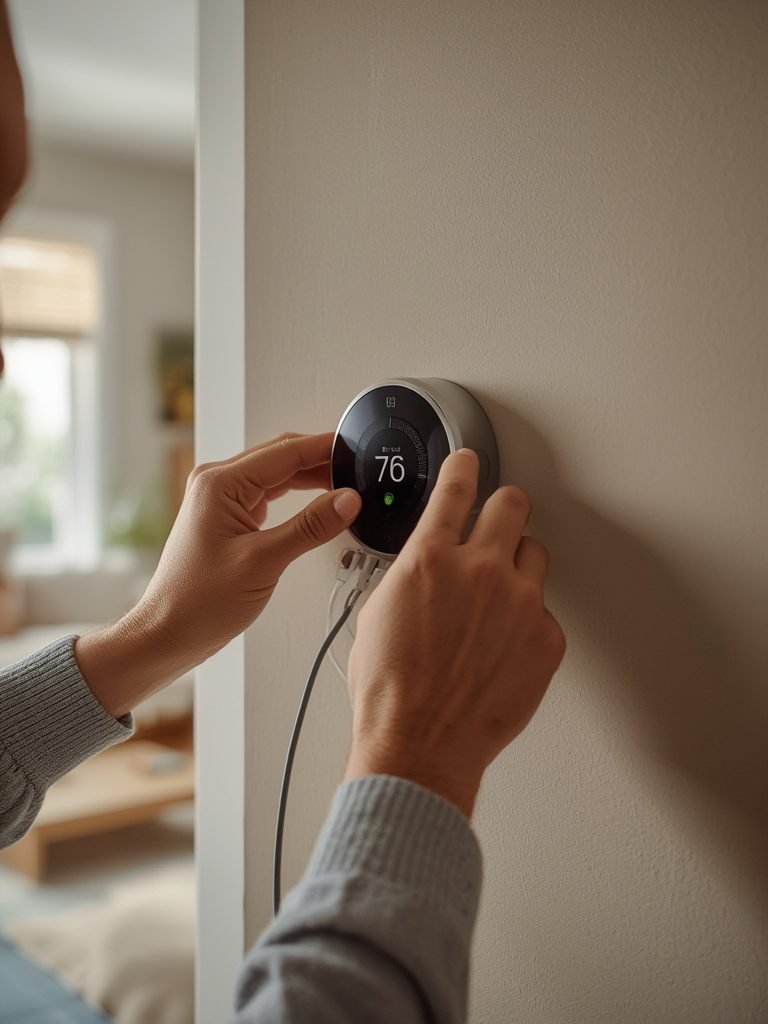
- Turn off HVAC power. Use your circuit breaker panel. Confirm power is off with a voltage tester — a $10 investment that prevents shocks.
- Remove old thermostat. Pull the unit from its base and label each wire as you disconnect. Most systems use simple push terminals or screws.
- Check for a C-wire. If you have one, proceed. If not, use the manufacturer’s included adapter. More tips: AirWorks Solutions Guide
- Mount the new base plate. Use a level. Mark holes, drill if needed, and secure with included screws.
- Connect wires to new plate. Match each label to the color-coded terminal. Press wires firmly into place.
- Attach thermostat face unit. Most snap or click into place. Reconnect HVAC power.
- Setup via app or touchscreen. Connect to WiFi (2.4 GHz only), set your schedule, and link with Alexa or Google Home.
- Test your system. Run heating and cooling to verify operation. Adjust schedule settings to maximize savings.
Required Tools At a Glance
- Small Phillips and flathead screwdriver
- Needle-nose pliers
- Voltage tester (for safety)
- Level
- Wire strippers (if you need to trim wires)
- Drill or hand screwdriver (for new mounting holes)
- Electrical tape (optional)
For most renters these tools are enough for installs that leave walls undamaged. The best smart thermostat for renters is specifically designed to fit existing screw holes and cover old paint lines — keeping your landlord happy and your deposit intact.
Common Smart Thermostat Mistakes (and How to Dodge Them)
Even the best smart thermostats DIY install options can produce disappointing results if setup is rushed. Here are the most common problems and exactly how to avoid them:
Skipping the C-wire check before ordering. This is the single most common mistake. If your home doesn’t have a C-wire and you order the Amazon Smart Thermostat or Google Nest without checking first, you’ll need an adapter that doesn’t come in the box. The ecobee is the only model here that includes one — if you’re not sure, go with the ecobee.
This is why checking compatibility before buying is so important — as Mississippi State University Extension notes, different thermostat models are available for each type of HVAC system, and older homes may not have the proper wiring setup for a smart thermostat — making compatibility the first thing to verify, not the last.
Using 5 GHz WiFi for setup. All three models require 2.4 GHz for initial setup and ongoing app connection. Trying to connect on a 5 GHz band is the most common reason the app fails to pair — it’s not a broken device, just the wrong network band.
Speaking of smart home upgrades — if you’re already improving your entryway, our doorbell mount review covers the best options to complete your smart home setup from the front door in.
Not setting a schedule during setup. The app wizards for all three models walk you through this during first-time setup. Skipping it and leaving the thermostat on manual mode eliminates most of the energy savings — the whole point of upgrading in the first place.
Buying based on price alone. The Amazon Smart Thermostat is excellent value at $49 — but only if you’re in an Alexa household and have a C-wire. If either of those doesn’t apply, the ecobee at $99 is the better investment by a wide margin.
With proper setup and the right model for your home, a quality energy saving thermostat can reduce annual heating and cooling costs by up to 23% — and the install genuinely takes less than an hour.
For more on optimizing your home’s energy use, see our garage door insulation guide — one of the most underrated ways to reduce energy bills year-round alongside a smart thermostat.
Final Thoughts: Which Model Is Worth Your Money?
After testing all three models, the answer comes down to one question: do you have a C-wire and which smart home ecosystem do you already live in?
If you own your home, have a C-wire, and already use Google products — the Google Nest 4th Gen is the best energy saving thermostat you can buy. The self-learning is genuinely impressive and the install is the most guided of the three.
If you’re a renter, in an older home, or simply not sure whether you have a C-wire — the ecobee Essential is the best smart thermostat for renters and the safest all-around pick. The Power Extender Kit removes the biggest installation obstacle, it works with every major smart home platform, and 23% savings potential is the highest of any model at this price.
If you’re new to smart thermostats and want the lowest-risk entry point — the Amazon Smart Thermostat is the obvious choice. It costs less than a tank of gas, pays for itself in under a year, and the Alexa-guided install is the simplest of the three by a significant margin.
Pick the model that matches your situation, follow the install guide above, and set up your schedule on day one. That single step — setting the schedule — is what turns a $50 purchase into $50 back in your pocket every year.
And if you’re turning your home into a smarter space, our video doorbell review covers the best options for securing your front door — a natural next step alongside a smart thermostat upgrade.
Frequently Asked Questions
How do I know if my apartment’s HVAC system is compatible with a smart thermostat?
Check if your system is “low-voltage” (24V) — common for most newer apartments and homes. Use the manufacturer’s online compatibility checker before buying, or ask your landlord if you’re unsure about the wiring type.
Can renters install a smart thermostat without risking a security deposit?
Yes — the best smart thermostat for renters is designed to be fully reversible. Reinstall the original thermostat before moving out, avoid making new holes, and take a photo of the original wiring for reference. See our guide on damage-free wall solutions for more renter-friendly ideas.
Do all smart thermostats require a C-wire?
No — but most benefit from one for constant power. The ecobee Essential is the only model here that includes a Power Extender Kit in the box, making it the top best smart thermostats DIY install choice for homes without a C-wire.
What real energy savings can I expect in 2026?
Up to 23% reduction on annual heating and cooling costs with proper schedule settings on a quality energy saving thermostat. The Amazon Smart Thermostat saves an average of $50/year per EPA estimates — meaning it pays for itself in under 12 months at current energy prices.
Which WiFi or smart home features could cause setup problems?
Voice assistant linking and WiFi pairing sometimes fail on 5 GHz networks. Always use 2.4 GHz WiFi for your smart thermostat DIY install, and update apps immediately after installation is complete to avoid firmware-related pairing issues.