

Expert Guide: Should You Invest in a garage door insulation kit worth it for True Temperature Control?
Key Takeaways
- A garage door insulation kit worth it can cut energy bills by up to 80%, saving $250+ every year in average climates.
- R-Value and proper kit installation are critical—poor fit means wasted money and weak results, especially in workshops or gyms.
- Not all kits address air gaps—advanced users often combine insulation kits with extra weatherstripping for true year-round comfort.
- What Is a Garage Door Insulation Kit and Why Does It Matter?
- Step-by-Step: How to Insulate Your Garage Door for Real Results
- Advanced Analysis and Common Pitfalls: What Most DIY Guides Miss
- Conclusion: Is a Garage Door Insulation Kit Worth It in 2026?
- FAQ: Garage Door Insulation Kits in 2026
What Is a Garage Door Insulation Kit and Why Does It Matter?
A garage door insulation kit worth it is a set of panels or rolls—usually made from polystyrene, polyurethane, or polyester—that attach to your existing garage door. The goal is to boost the door’s R-value, slow heat transfer, and protect your garage from extreme temperatures in any season.
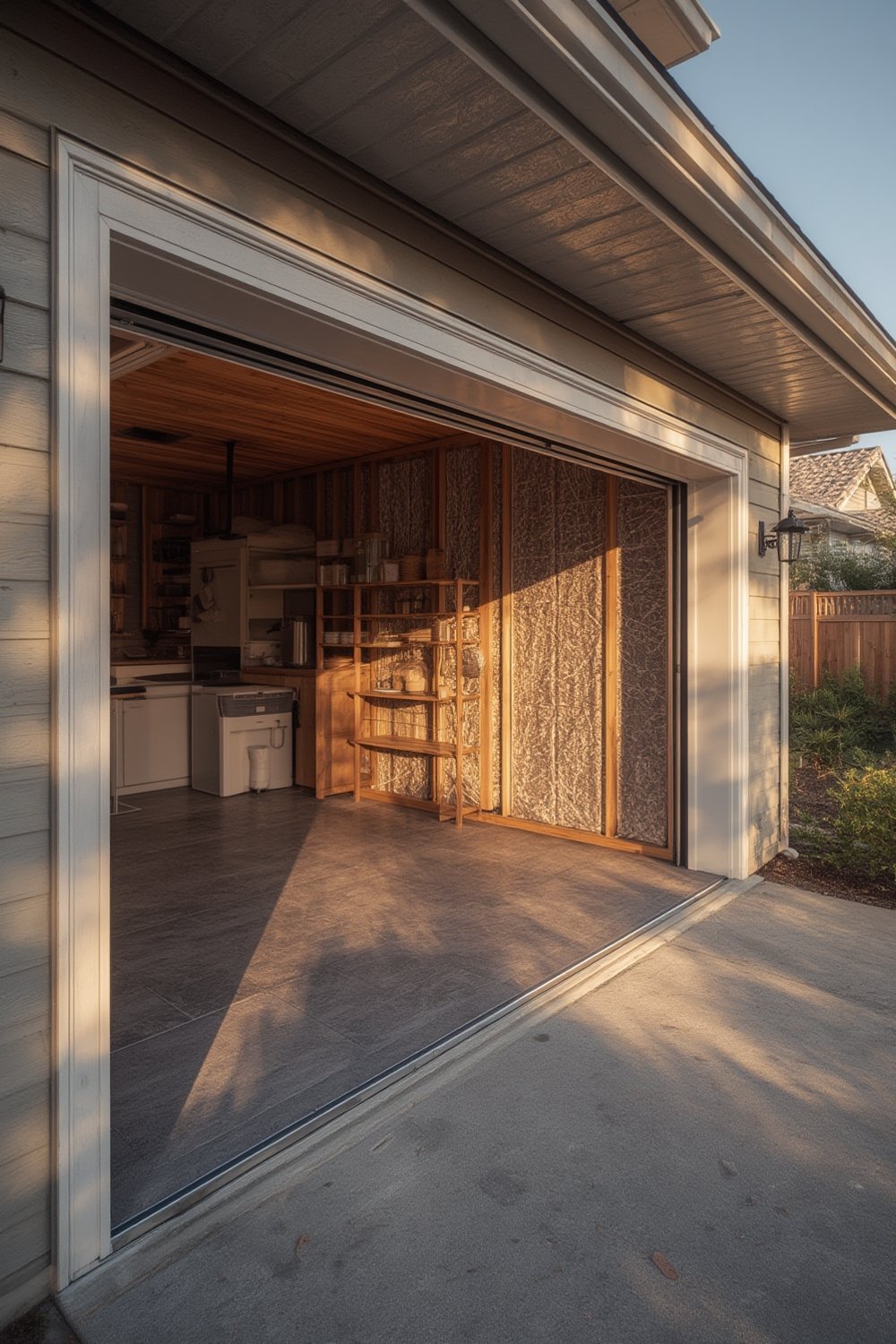
If you use your garage as a workshop, home gym, or storage for climate-sensitive items, energy leaks from an uninsulated door can sabotage your comfort and drive up utility costs. According to market research, an uninsulated steel garage door on an attached garage can cost the average US homeowner up to $325 each year, or 8-12% of their home’s total energy use. Higher-end kits with an R-value of 9 or above can cut this loss by as much as 80%.
Whether you’re a basic DIYer seeking bill savings or a specialized user (gym, crafts, pet care), insulation can transform a drafty garage into a usable, comfortable space all year. But the right result depends on your kit, its fit, and your expectations.
For more on optimizing temperature in other tricky home areas, read about ceiling fan direction for AC use.
Step-by-Step: How to Insulate Your Garage Door for Real Results
Here’s a complete, no-nonsense guide to choosing a garage door insulation kit worth it—without cutting corners that sabotage comfort or energy savings..
- Measure your door precisely, panel by panel. Even “universal” kits expect variation. Record the height, width, and depth of each garage door segment.
- Choose the right kit for your goals. Polystyrene kits (R-6 to R-9) are less expensive, but don’t seal air gaps as well as polyurethane kits (R-12 to R-18). For gym, craft, or climate-controlled use, err on the higher R-value side.
- Cut insulation panels for a snug fit. Gaps destroy effectiveness and can cause condensation or frost issues. Use a sharp utility knife, straightedge, and heavy-duty gloves. Dry fit each piece before attaching.
- Install using the correct fasteners. Most kits offer plastic clips, adhesives, or edges that push into place. For textured doors or panels with raised ridges, double-check that the insulation is flush against the underlying steel.
- Seal every possible gap. Use closed-cell foam tape or weatherstripping between panels, around the perimeter, and between moving hinges for best results. This simple addition often makes a bigger difference than the insulation alone.
- Finish with a visual inspection and a thermal test. If possible, use a FLIR thermal camera to spot hidden leaks. If you don’t own one, open your garage on a cold (or hot) day and check for drafts with your bare hand.
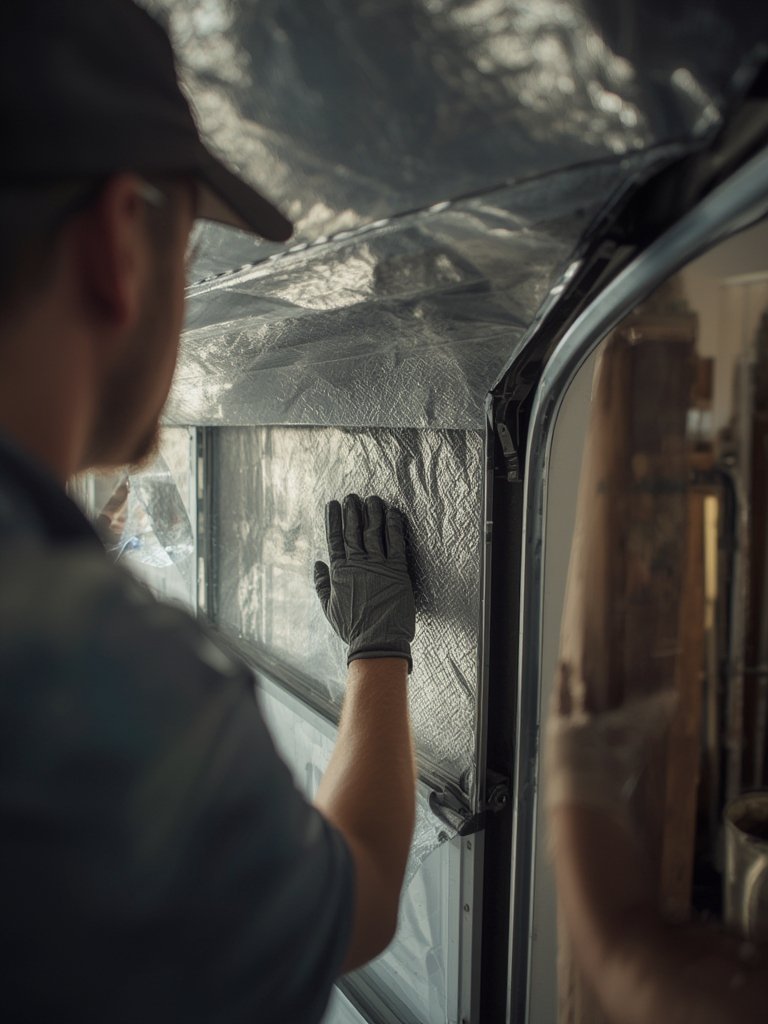
Average DIY installation times for double garage doors: about 90 to 120 minutes for basic polystyrene kits, a bit longer for advanced gap-sealing or hybrid systems.
If you’re also remodeling your garage or laundry area, see our hands-on peel and stick countertop for renters guide—it’s renter friendly and pairs well with any garage upgrade.
Advanced Analysis and Common Pitfalls: What Most DIY Guides Miss
Most homeowners make two costly mistakes when choosing a garage door insulation kit worth it: underestimating both the importance of air sealing and the massive R-value differences in kit materials. Let’s break down where things really go wrong.
- Poor Panel Fit: Ill-fitting polystyrene panels often leave small air pockets. According to energy audits, this drastically reduces the practical R-value compared to lab results.
- Thermal Bridging: Where metal “bridges” the insulation, heat (or cold) bypasses your barrier. Polyurethane foam kits mitigate this by expanding to fill gaps, but classic panel kits fall short if you skip edge or hinge sealing.
- Payback Miscalculated: Many guides under-report ROI timelines. Realistic savings—$253-$284 a year—assume near-perfect air sealing and at least R-9 insulation. DIYers with lower skill or incomplete kits will see longer payback, possibly over 2 years.
- Overlooking Advanced Use Cases: Gyms, workshops, pet rooms, or temperature-sensitive storage usually need higher R-values than casual vehicle storage. If your garage is attached (especially with a room overhead), insulation can impact up to 15-20% of your home’s energy performance—yet most kits and reviews ignore this.
| Type | R-Value* | Material | Upfront Cost (2-car) | Annual Savings† | ROI Timeline | Pros | Cons |
|---|---|---|---|---|---|---|---|
| Polystyrene Panel Kit | R-6 to R-9 | Rigid panels | $200-$400 | $200-$253 | 1.6 years | Affordable, easy DIY | Poorer fit, thermal bridging risk |
| Polyurethane Spray/Panel Kit | R-12 to R-18 | Flexible foam | $600-$1,200 | $270-$284 | 4.2 years | Best gap filling, superior comfort | Higher cost, trickier to install |
| Hybrid Polyester (Steel-Line Mammoth) | R-8 to R-10 | 100% Polyester | $500-$650 | $220-$260 | 2–3 years | Excellent sound + thermal control | May not fit all panel types |
*R-Value = insulation effectiveness.
†Annual savings and ROI from Garage Door and More (2025).
Recent industry innovations—like full polyester kits—aim to eliminate both noise bleed and temperature swings but come at a higher price. Always check that advanced kits match your garage door style, as panel profiles and window cutouts can create compatibility problems (these are overlooked in most online shopping guides).
Combine insulation with proper weatherproofing best practices to prevent water leaks, especially in damp climates.

External studies and market trends point out that as more US homeowners convert garages into gyms or studios, demand for true year-round climate control (not just basic insulation) is at an all-time high.
Conclusion: Is a Garage Door Insulation Kit Worth It in 2026?
A garage door insulation kit worth it is a cost-efficient strategy for most US homeowners—especially if your garage has living space above, shares a wall, or is regularly used for recreation, work, or storage. While basic kits pay for themselves quickly, advanced installations with proper air sealing yield bigger comfort and savings benefits. Always match your garage door insulation kit worth it choice to your unique garage use, climate, and door style.
Ready to transform your garage? Research your kit, measure twice, and focus on air sealing for true results—don’t settle for weak shortcuts. Start saving and boosting comfort now.
FAQ: Garage Door Insulation Kits in 2026
Do garage door insulation kits actually lower energy bills?
Yes—a garage door insulation kit worth it can reduce garage-related energy loss by up to 80%, saving the average attached-garage homeowner $200 to $280 annually. Results vary with climate, kit type, and attention to air sealing.
What is the best R-value for a garage door insulation kit worth it in 2026?
R-9 or higher is ideal for workshops, gyms, or climate-controlled storage. Standard vehicle garages can choose R-6 or higher. Aim for polyurethane or advanced polyester kits for the best blend of care-free fit and effectiveness.
What are the most common installation mistakes?
Common mistakes include bad panel fit (leaving air gaps), skipping edge sealing, using weak adhesives, or overlooking panel compatibility. These can slash real-world R-value and cause insulation to sag or fail early.
Will insulation make my garage more comfortable for year-round workouts?
Absolutely. Well-installed insulation stabilizes garage temperatures, blocks street noise, and limits humidity swings. It’s essential for home gyms, pet rooms, or craft studios.