

Outdoor shower plumbing DIY is a practical way to keep sand, grass, and outdoor messes from coming inside—but realistic installation takes more than a garden hose and a dream. Here’s everything you need to know before you start, including a no-nonsense step-by-step process, what might go wrong, real cost expectations, hard truths about winter, and key safety notes.
Key Takeaways
- DIY outdoor shower plumbing requires careful planning for drainage, freeze-proofing, and code compliance—many online guides skip these essentials.
- Costs vary widely, from about $100 for a basic kit to over $1,000 fully installed, plus labor and trenching where needed. Most installs take 2–5 hours.
- Common pitfalls include skipping winterization, using the wrong connectors, and underestimating surface drainage problems. Proactive site planning greatly reduces issues.
- 1. What Is DIY Outdoor Shower Plumbing—And Who Actually Needs It?
- 2. Step-by-Step Outdoor Shower Plumbing DIY Guide (Complete Process)
- 3. Advanced Analysis & Common Pitfalls
- 4. Conclusion
- 5. FAQ
What Is DIY Outdoor Shower Plumbing—And Who Actually Needs It?
Outdoor shower plumbing DIY projects let you add a rinse station outside—often near a pool, garden, or beach––to solve the age-old headache of muddy footprints, pet messes, or sand tracked indoors. If you regularly deal with these (or want a poolside amenity), an outdoor shower can save hours on cleaning, protect indoor plumbing, and even add home value. Zillow reports that homes with outdoor showers sold for about 2.8% more, or $11,500 extra on average, though results depend on local climate and home style (source).
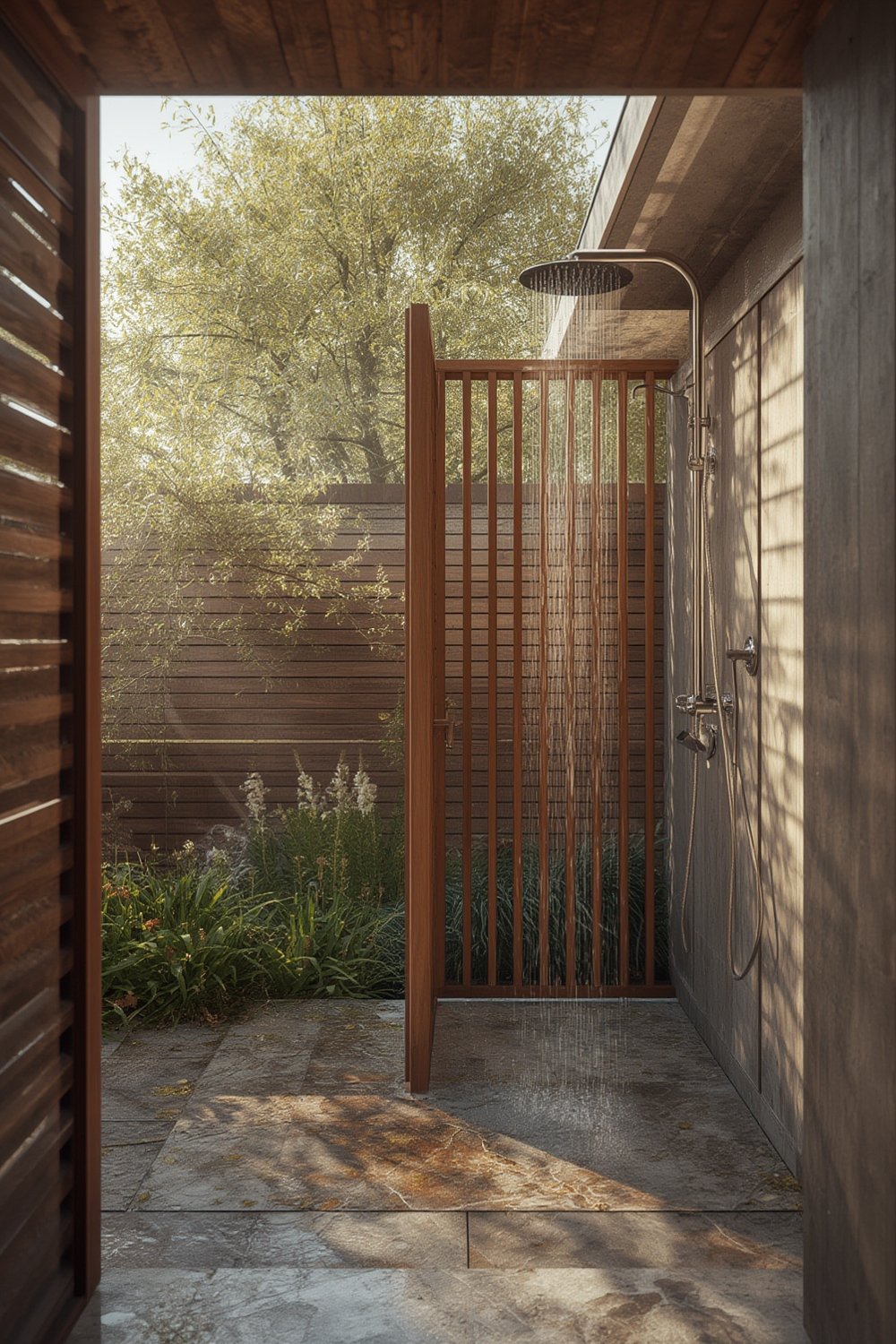
There’s little verified 2025–2026 data on how many U.S. households are DIY’ing these showers just for mess control, but the overall outdoor shower market is growing 6.5% a year and is projected to hit $350 million by 2033 (market report). Most installs are near pools, beach access, or gardening areas—often simple wall-mounted setups or freestanding kits you can install in a weekend. Rising popularity with renters and parents also drives this trend. The downside? If you don’t plan for winter or local code rules, your new shower could end up causing leaks, mold, or frozen pipes.
Step-by-Step Outdoor Shower Plumbing DIY Guide (Complete Process)
Ready to reclaim your backyard? Outdoor shower plumbing DIY is one of the most satisfying home upgrades you can tackle this season.? Here’s the realistic, no-gloss process. This guide assumes you’re using a typical faucet kit—not a “camping” bag or hose sprayer—and tying into existing cold or hot/cold supply lines.
- Choose Your Site and Plan Drainage
- Pick a location near an existing water source (backs of houses, garages, or pool sheds work well).
- Check local code rules: NEC 680.12 requires at least 5 feet from any pool edge to electrical switches or outlets (source).
- Plan for drainage: use gravel, a dry well, or a simple drain line angled downhill. Never direct water into your foundation.
- Pick a Shower Kit and Tools
- Wall-mounted faucet kits ($100–$1,000), or freestanding posts ($800–$3,000). Budget kits (like Aolemi at $88) are available, but longevity is uncertain (details).
- Minimum tools: pipe cutter (ratcheting PVC cutter or fine-tooth miter saw), PEX crimper if applicable, Teflon tape, PTFE pipe sealant, drill, hole saw, trenching shovel.
- Stub Out and Run Supply Lines
- Use 3/4-inch PEX or Schedule 40 PVC. Insulate supply pipes if exposed. Keep outdoor runs as short as possible, and slope lines to drain to prevent standing water.
- If tying into hot water, use temperature-rated PEX. Install a shutoff and drain inside the house (near the main line or utility area).
- Trenching supply lines below frost level (18–24 inches in most U.S. regions) is best for permanent setups.
- Mount the Kit and Plumb the Connections
- Attach shower post or panel securely—anchoring to wall studs or mounting posts in concrete for freestanding models. Reference kit instructions.
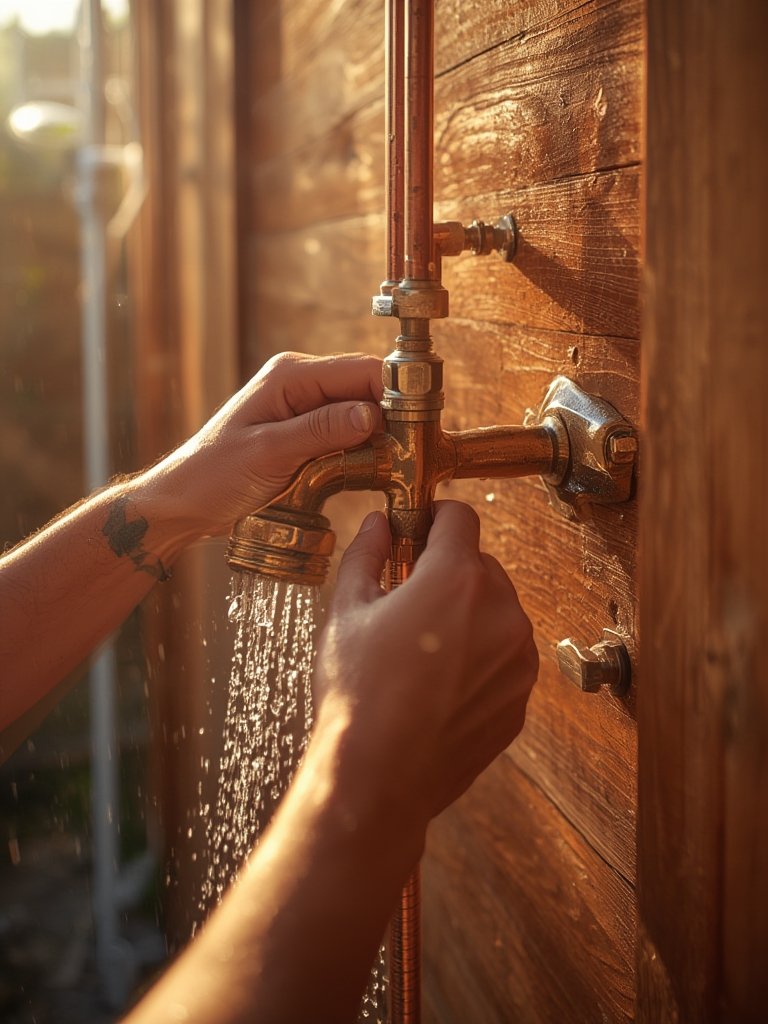
- Connect water lines with proper adapters; use fresh Teflon tape and hand-tighten then turn a quarter turn more for leak-free joints.
- Test for leaks before closing up any walls or burying piping. Check for proper hot/cold orientation if applicable.
- Install Drainage Solution and Privacy (Optional)
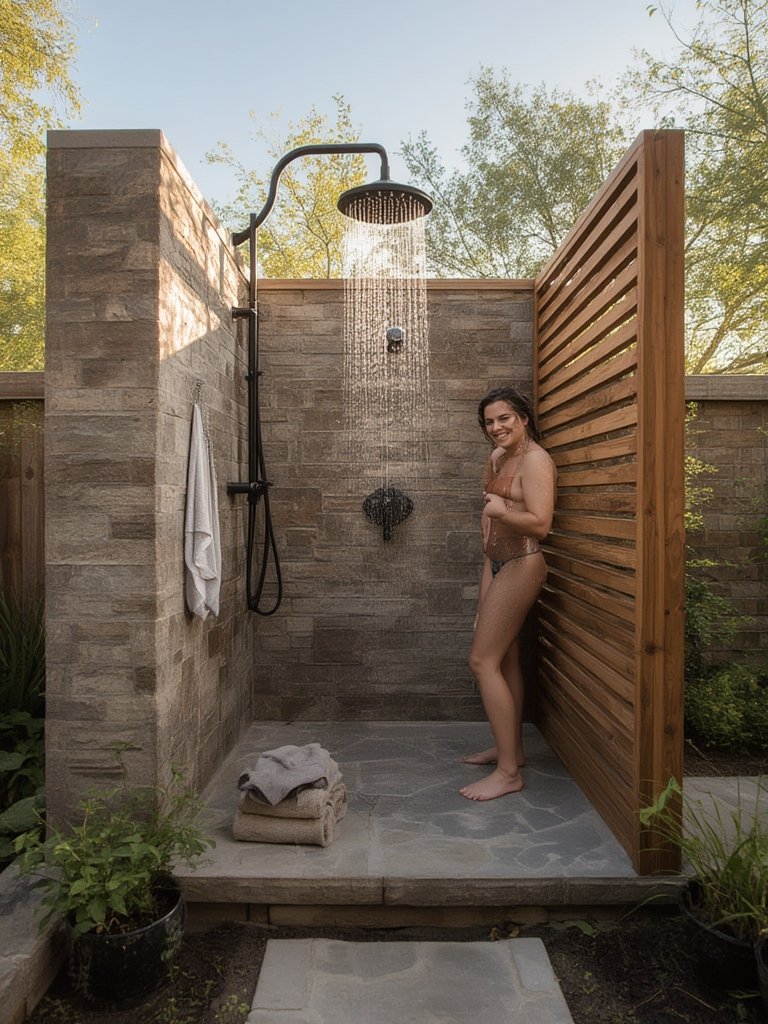
- Integrate a base: gravel bed, permeable pavers, or a slatted wood platform.
- Enclosures—teak ($650–$2,500, 30 years sealed) or composite bases ($160–$430) can boost privacy and lifespan (source), though there’s no reliable user data on T-Post privacy screens.
- Test, Inspect, and Winterize
- Pressure-test the system again for leaks at all joints (run water through for at least 5–10 minutes while checking connections).
- In fall, drain the system, shut off and blow out lines with compressed air if possible. This step is too often skipped by DIYers and can avoid burst pipes in winter.
- Want to make your DIY install truly rental-friendly or temporary?
Skip the full trench and try vinyl-wrapped lines above grade. Pair with recommendations from peel and stick countertop for renters for simple improvements without the need for permanent alteration.
Advanced Analysis & Common Pitfalls
DIY guides online can make outdoor shower plumbing seem trivial, but there are several frequent problems that can turn an easy project into a frustrating money pit—and most high-ranking articles fail to mention them.
| Potential Problem | Likelihood | Consequence | Best Prevention |
|---|---|---|---|
| Skipping drainage, causing water to pool | High | Mold, foundation issues | Install gravel base or dry well; slope area |
| No winterization planning | High (cold climates) | Frozen/burst pipes, leaks | Add a shutoff and drain; remove showerhead each fall |
| Incorrect pipe/kit compatibility | Medium | Leaks, low pressure | Confirm faucet kit matches pipe size/type; use Teflon tape |
| Improper mounting (weak anchor points) | Medium | Shower tilts/collapses | Anchor to studs or concrete post pad |
| Not following code (NEC 680.12, zoning) | Medium | Fails inspection, future sale issues | Stay 5 feet from pool edge for switches; check local regs |
| Assuming easy heater integration | Medium | Burnout, scald risk | Only connect compatible tankless heaters; read specs |
| Lack of privacy/screen durability info | Low (cosmetic) | Short-lived privacy, return visits for repairs | Pick UV-resistant materials, avoid low-rated budget screens |
Budget faucet kits (including “Amazon bestsellers” in the $80–$120 range) sometimes get critical feedback for unclear instructions, cheap fasteners, and tricky connections—though no aggregated 1-star complaint data is available from Amazon as of 2026. Pay extra attention to compatibility if you plan to add a portable tankless water heater—some brands require adapters and may void warranties if not installed per instructions.
If you have AC or ceiling fans near your planned shower area, you might also want to optimize your ceiling fan direction for AC for better airflow and less humidity transfer indoors.
Conclusion
Installing an outdoor shower plumbing DIY project is a solid investment for families, pool owners, and gardeners—if you plan realistically. Remember to budget for all parts, address drainage and winterization up front, and avoid temptations to cut corners with cheap kits or hasty installs. While no 2025–2026 data shows direct reduction in indoor mess cleanup, a well-built shower can add real value and convenience, especially if you follow all the outdoor shower plumbing DIY steps in this guide. Ready to make your outdoor clean-up as easy as a quick rinse? Start designing your setup today—and prevent future water headaches by planning smart now.
FAQ
How much does it cost to install an outdoor shower with a faucet kit in 2026?
National averages in 2025 are wall-mounted kits from $100 to $1,000 (installed $500 to $1,400, 2 to 4 hours of labor). Freestanding posts cost $800 to $3,000 ($900 to $3,800 installed, 3 to 5 hours). Labor averages $45–$150 per hour with $50–$200 for call-out and trenching $5–$12 per foot (source).
What’s the #1 beginner mistake with outdoor shower plumbing DIY?
Failing to add a shutoff and drain for winterization, leading to frozen and burst pipes. Always include a valve and a way to blow out the line at summer’s end.
Can I hook up a portable tankless water heater (like Eccotemp L5) to my outdoor shower kit?
Possible, but not all faucet kits and water heaters are compatible—many need special adapters, and most brands require following installation specs exactly to avoid leaks or burnouts. There’s no 2026 efficiency or compatibility data, so check the latest product sheets.
Is a T-Post privacy screen effective for outdoor showers?
There’s no reliable data from Amazon or Reddit showing how T-Post privacy screens hold up outdoors. Most homeowners opt for teak or composite enclosures for better weather resistance and privacy over time (source).
How can I make my outdoor shower easier to remove if I’m a renter?
Use above-ground supply lines with screw-on fittings, portable base platforms (like composite deck tiles), and freely standing screens. For other renter-friendly upgrades, consider peel and stick countertop for renters solutions.